

Speakers
Speakers
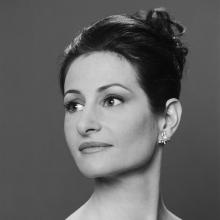
Maria Ferrante is a soprano singer who was ‘discovered’ in a voice class at university. She has studied with great singers like Franco and travelled to China to learn from Jiang Jou, the bel canto master. She has collaborated with many musicians worldwide. She also has four solo CDs to her credit, including Christmas in Worcester, Best Kept Secrets and Sea Tides and Time.
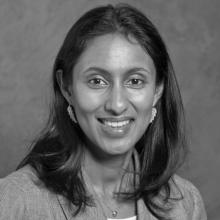
Hiranya Peiris is a reader in Astronomy at University College London and coordinator of the CosmicDawn project. She studies the fossilized heat of the Big Bang for clues about the physics that governed the very early universe.
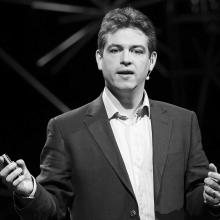
Lee Cronin is the Regus Chair of Chemistry at University of Glasgow. He explores how chemistry can revolutionize modern technology. His lab has created a 3D printer that could make matter come alive.
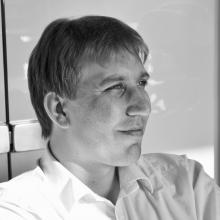
Chris Lintott is co-presenter of BBC’s long-running series Sky at Night. He also runs Zoouniverse, a successful collection of citizen science projects that investigates galaxy formations to discover planets and more.

Maya Tolstoy is a marine geologist at Lamont-Doherty Earth Observatory. Her research interests include mid-ocean ridge earthquakes and the impact of anthropogenic noise on marine mammals.
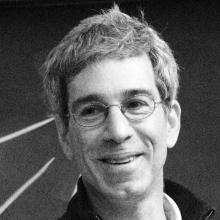
Marc Abrahams is editor and co-founder of the magazine Annals of Improbable Research. He started the Ig Nobel Prizes honouring achievements that make people laugh, then think.
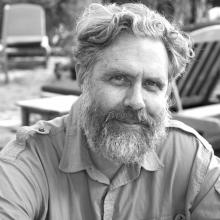
George Church is director of personalgenomes.org, which provides the world’s only open-access information on human Genomic, Environmental and Trait data. He is also a professor of Genetics at Harvard Medical School.
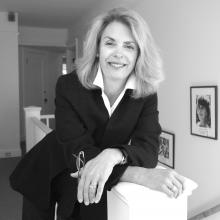
Londa Schiebinger is Stanford University’s John L Hinds professor of History of Science and director of the EU/US Gendered Innovations in Science, Health & Medicine, Engineering, and Environment.
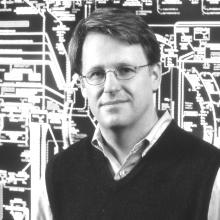
Ian Foster is director of the Computation Institute in Chicago. His research on high performance distributed and parallel computing has many calling him 'father of Grid computing'.
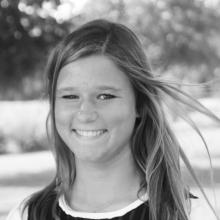
Brittany Wenger won the 2012 Google Science Fair's Grand Prize for building a cloud-based neural network to accurately assess tissue samples for signs of breast cancer.
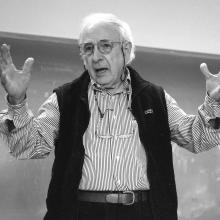
John Searle is the Slusser Professor of the Philosophy of Mind and Language at UC Berkeley. He is most known for his Chinese room argument and concept of consciousness as a biological phenomenon.
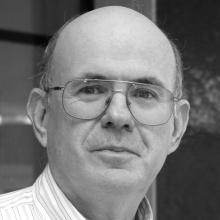
Eliezer Rabinovici is vice president of SESAME and physics professor at Hebrew University. A theoretical physicist, his area of research are quantum field theory and string theory.
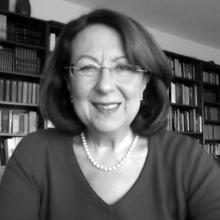
Zehra Sayers is a founder of Sabanci University and co-chair of SESAME's Scientific Advisory Committee. Her interests include studying 3D structure to function relationship in biological macromolecules.
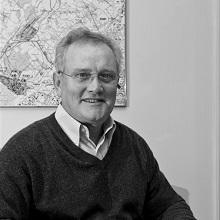
Steve Myers is the head of CERN’s Office of Medical Applications. He steered the operation of the Large Hadron Collider from 2010 to 2012. By July 2012, the collider had produced enough events to allow ATLAS and CMS experiments to discover the Higgs boson.
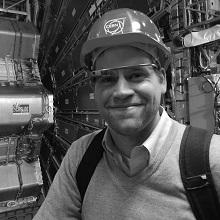
Andrew Vanden Heuvel is a freelance online physics teacher. He was a finalist for the National Online Teacher of the Year 2010 in the United States. He takes classrooms on virtual field trips and was a Google Glass Explorer into the LHC.
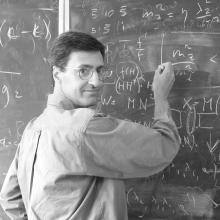
Gian Giudice was appointed the 2013 International Jacques Solvay Chair in Physics. A theoretical physicist at CERN, he studies what the Higgs measurement might mean for the fate of the universe.

Becky Parker, MBE, Head of Physics at Simon Langton Grammar School, has inspired many students to pursue science. She won the first RAS Patrick Moore Medal for outstanding work as a teacher of astronomy.
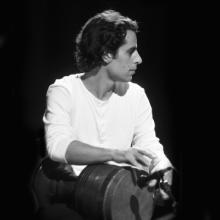
Bijan Chemirani is a French-born percussionist who learned to play the zarb from his father, Djamchid Chemirani. He performed with his brothers, Keyvan and Jamshid, for many years. Bijan also plays other Iranian instruments such as the daf, riqq, and cajon.
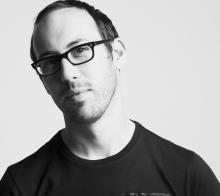
Yaron Herman is an Israeli jazz pianist who brings together math and philosophy in music. He has produced five albums, given many concerts worldwide and won many awards.