

Speakers
Speakers
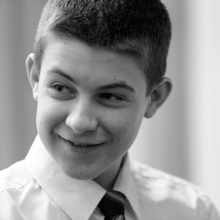
At 13 years old, Jamie Edwards attempted to become the youngest person ever to achieve nuclear fusion by colliding the nuclei of hydrogen atoms via inertial electrostatic confinement in his school lab. When Jamie told his headmaster about his plan to build the nuclear reactor and asked for funding, the reply was “Will it blow up the school?” Jamie got the funding, and rest assured, the school still stands. For his next project, Jamie – who wants to be a nuclear engineer or work in theoretical physics – has his sights on building a miniature hadron collider. He’s now 14 years old.
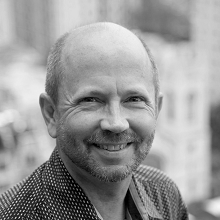
Robert P. Crease uses laboratory history to examine key issues in philosophy of science, science studies, and ethics. A professor at Stony Brook University, he has written, translated and edited numerous books on the history and philosophy of science. He writes a monthly column called 'Critical Point' for Physics World, and is the co-editor-in-chief of Physics in Perspective. He recently co-authored The Quantum Moment: How Planck, Bohr, Einstein, and Heisenberg Taught Us to Love Uncertainty, and edited Science Policy Up Close, a collection of writing by John Marburger, former science adviser to the US president.
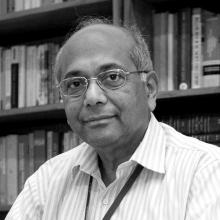
Srikumar Banerjee, nuclear scientist and metallurgical engineer, is the Indian Department of Atomic Energy’s Chair Professor at Bhabha Atomic Research Centre. Homi J. Bhabha, after whom the Centre is named, started India’s three-stage nuclear power programme in the 50s. It is one of the best-known efforts to develop thorium-based nuclear power, thorium having greater safety benefits, absence of non-fertile isotopes and higher occurrence and availability. Banerjee’s work provides the basis for analysing the microstructural evolution and radiation stability of structural materials in nuclear reactors.
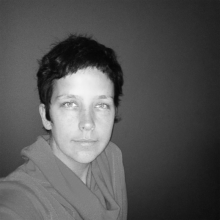
Tamsin Edwards is a particle physicist turned climate scientist trying to find out how uncertain we are about climate change – from the last ice age to future sea level – and how best to communicate this. She is an active blogger and uses social media to change the way people think about climate science. Edwards was named one of "20 women making waves in the climate change debate". A postdoctoral researcher at the University of Bristol, she is preparing to begin a lectureship at the Open University, using multidisciplinary research and communication to provide distance learning in environmental sciences.
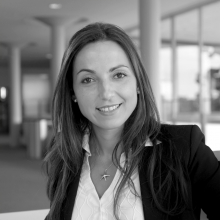
For 10 years, Veronica Bindi worked as Time of Flight detector expert on AMS02, the largest and most powerful experiment in space for the measurement of cosmic rays. As an assistant professor of physics at the University of Hawaii, her research interests are dark matter and cosmic rays. She received a NASA grant to study solar activity and radiation damage for the next human mission to Mars. She was also featured as a Woman Inspiring Europe in 2013. In Hawaii, she organizes many activities for young students, including Masterclasses, Cosmic Rays days and has been appointed a Quarknet mentor.
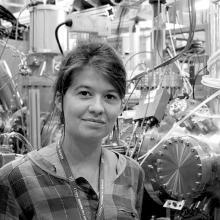
Chloé Malbrunot completed her PhD in Particle Physics at TRIUMF, Canada’s National Laboratory for Nuclear and Particle Physics. In 2013, she became a CERN research fellow and has since been working on two experiments at the CERN antiproton decelerator – ASACUSA and AEGIS. AEGIS, which inspired the TED-Ed video, tests the principle of universality of free fall for antimatter. Malbrunot was also the co-organizer of the second Women in Physics conference in Vancouver and believes educational outreach to be an essential part of a scientist’s job.
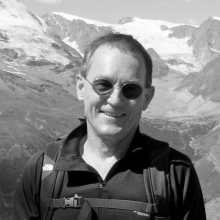
Jasper Kirkby, particle physicist, is the head of CERN’s CLOUD experiment which investigates possible physical mechanisms for solar or cosmic ray forcing by simulating the conditions under which clouds form in the earth’s atmosphere. He completed his degrees at Oxford and London, spent a dozen years in Stanford University before joining CERN in 1984. He conceived of the idea for the Tau-Charm Factory, which lead to the building of the Beijing Electron-Positron Collider II. Kirkby has built detectors, carried out experiments and lead large teams at particle accelerators in the US and Europe.
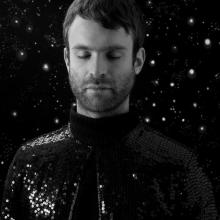
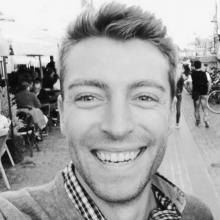
Michael Bodekaer is the founder of Labster which teaches life sciences through gamified education in immersive 3D virtual worlds and laboratories. Proven to significantly enhance student’s motivation, these pioneering teaching tools that are bringing a revolution to world class learning. He also founded Learn Technologies, a Swiss company focused on immersive Virtual Reality for learning and training simulations.

Madeline Lancaster is a developmental, stem cell and neuro biologist at the Medical Research Council Laboratory of Molecular Biology. She leads the research group studying human brain evolution in cerebral organoids, which use stem cells to generate brain tissue clumps in a dish. These "mini brains" are the first 3D models of a developing human brain and could help uncover the secrets of what makes our brain unique.
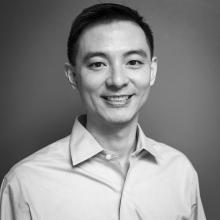
S. Matthew Liao is the Director of the Bioethics Program at New York University. He is the editor-in-chief of the Journal of Moral Philosophy, a peer-reviewed international journal of moral, political and legal philosophy and has written on philosophy, morality, bioethics and human rights. Liao presents challenging ideas such as whether we should use drugs and technology to erase traumatic memories and employ human engineering as a possible, partial solution to climate change.
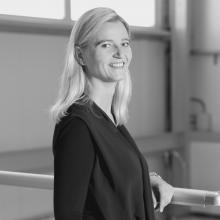
Edda Gschwendtner, physicist, is the project leader of CERN’s plasma wakefield acceleration experiment, AWAKE. The need for ever-increasing particle energies to probe the fundamental building blocks of nature have led to machines of gigantic sizes. AWAKE pursues a novel technology that produces accelerating fields 1000 times higher than those achieved with conventional techniques. This will allow us to push the energy frontier of future accelerators while significantly decreasing the size of the machines themselves.

Rachel Armstrong, professor of Experimental Architecture at Newcastle University, innovates and designs sustainable solutions for the built environment using advanced new technologies such as synthetic biology and smart chemistry. Rachel Armstrong’s new science thesis and book, Vibrant Architecture (Matter as CoDesigner of Living Structures), explores prospects for transformations of matter into habitable structures, which prompts a re-evaluation of how we think about sustainability in our homes and cities.
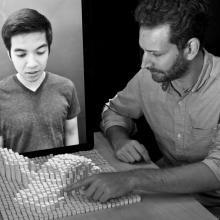
Sean Follmer, assistant professor at Stanford University's Mechanical Engineering Design Group, researches how we can apply shape-changing and deformable interfaces to interact with each other when using devices. He creates tangible interfaces whose form adapts to the functions and ways users want to interact. He is also trying to integrate physical objects into the digital design process seamlessly and to look into new interfaces for rapid prototyping that could increase possibilities for users.
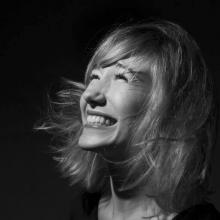
Linda Liukas is a programmer, storyteller and illustrator. Her children's book, Hello Ruby, raised a total of $380,000 on Kickstarter. She founded Rails Girls, which has organized workshops in over 230 cities, teaching the basics of programming to more than 10,000 women. Linda worked at Codeacademy, which she left to write stories that teach children about software and programming. She won the 2013 Ruby Hero prize and was named the Digital Champion of Finland by the EU Commissioner for Digital Agenda.
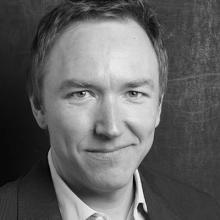
Tim Dixon is the Managing Director of Purpose Europe, based in London. Purpose is a public benefit corporation that is a home for building 21st century movements and creating ventures, tools and technology that use the power of participation to change the world. More than 50 million people around the world have been mobilised to action through movements that Purpose and its team have founded or co-founded. Tim is the co-founder of The Syria Campaign, former Australian Prime Ministers’ chief speechwriter and economic adviser, former lawyer, and co-author of a leading economics textbook in Australia. Tim brings his multidisciplinary background to projects for positive social change.
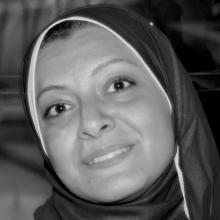
Gihan Kamel is a lecturer at the Physics Department in the Faculty of Science at Helwan University, Egypt, and an Infrared Microspectroscopy Beamline Scientist at SESAME, where she is also part of the User’s Executive Committee. SESAME (Synchrotron-light for Experimental Science and Applications in the Middle East) is an association that illuminates the Middle East through scientific excellence and collaboration turning peace into reality.

Vikki Stone is a British comedian and composer, best known for her comedy songs. She has appeared in many TV and radio shows as an actress and comedian, and has written original music for many TV shows. Vikki's most recent commission is a comedy choral piece for 750 singers that will receive its premiere at the Royal Albert Hall in 2016. Earlier this year, Vikki was made Associate of The Royal Academy of Music for her work in music and comedy.