

Speakers
Speakers








Marcia Barbosa has a PhD in physics from Brazil’s Universidade Federal do Rio Grande do Sul, where she is now the director of its Physics Institute. She studies the complex structure of the water molecule, and has developed a series of models of its properties which may contribute to our understanding of how earthquakes occur, how proteins fold, and could play an important role in generating cleaner energy and treating diseases. She is actively involved in promoting Women in Physics and was named the 2013 L’Oreal-UNESCO for Women in Science Awards Laureate for Latin America.

Sonia Trigueros’s research focuses on the design of novel nanostructures to target DNA biomolecular motors and DNA conformational states in dividing cells, specifically cancer cells. She is developing nanomedicines to tackle bacterial antibiotic resistance. A PhD in molecular biology from IBMB-CSIC and Universidad de Barcelona, Trigueros was a postdoctoral fellow at Harvard and Oxford, and a research visitor to many academic institutions including NIH-Washington and Havana University. She is an associated professor at the Physics Department and co-director of the Oxford Martin Institute of Nanoscience for Medicine at University of Oxford.
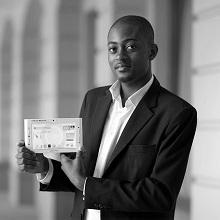
Arthur Zang, a 26-year-old Cameroonian engineer, invented the life-saving Cardiopad. This touch screen medical tablet enables heart examinations such as ECG to be performed in remote locations. The results are transferred wirelessly to specialists so that patients living in rural areas do not have to travel to urban centres for medical examination.
Julia Greer researches lightweight, 3-dimensional nano-architectures and designs experiments to assess their properties and deformation mechanisms. These ‘nano-metamaterials’ have multiple applications, which provide a rich ‘playground’ for fundamental scientific pursuits. Greer, professor of Materials Science at CalTech, has a Ph.D. in Materials Science and Engineering from Stanford University. She was recognized as a Young Global Leader by the World Economic Forum in 2014. She is also an accomplished concert pianist.

Andrew Nemr is a tap dance artist who directed Cats Paying Dues, co-founded the Tap Legacy Foundation, Inc. and worked with Nat Adderley Jr. He is also a TED Fellow and Artist-in-Residence for Quarterly Arts Soiree at Webster Hall. A recipient of an NEA Masterpieces: Dance Initiative Grant to reconstruct the works of classic tap dance soloists, Nemr won critical and popular acclaim for his presentation of Echoes in Time.
Nina Fedoroff’s research interests range from the biochemistry of microRNA processing and transposition to the design of greenhouses for hot, humid environments, although she is best known for her pioneering work on plant transposons. A PhD from Rockefeller University, she is an Evan Pugh Professor at Pennsylvania State University. A 2006 National Medal of Science laureate, she served as Science and Technology Adviser to the US Secretary of State and to USAID's administrator.

Nitin Sawhney's career spans decades of solo albums, film scoring, video game soundtracks, work for dance & theatre, commissions for leading orchestras, dj sets, tv soundtracks, radio broadcasting and live performances around the world with his band. Sawhney has received many awards including a MOBO, New York Bessie and two BBC Radio 3 Music Awards and nominations for the Ivor Novello, Mercury prize and BAFTA. Sawhney holds 6 honorary doctorates from British universities and is a fellow of LIPA and Southbank University. He turned down an OBE in 2007 for ethical reasons.

Cofounder and chief scientist of LightSail Energy, Danielle Fong was featured in Forbes’ 30 under 30 list of people who aren’t waiting to reinvent the world in 2012. Fong dropped out of junior high school at age 12 to attend Dalhousie University, then dropped out of Princeton University’s Plasma Physics Department to start LightSail Energy. The company develops a form of compressed air energy storage, called ‘regenerative air energy storage’, which may be the missing link in the plan to make the world’s electrical grid green.

In 2012, Topher White founded Rainforest Connection, a start-up which converts recycled cell-phones into solar-powered listening devices to monitor and protect remote forests in real-time. Now an established NGO, Rainforest Connection has helped stop illegal logging and poaching operations in Sumatra. The system is being expanded to three more rainforest reserves in Indonesia, the Amazon and Africa. White holds a BA in Physics and has worked as web chief of ITER and was co-founder of Enthuse, which built a first-of-its-kind sports engagement and mobile rewards platform.
John Mighton is a mathematician and playwright and is the founder of JUMP Math, a charity that is working to improve the teaching math. He appeared in Good Will Hunting, and contributed a monologue to the film based on the argument he makes in his book The End of Ignorance that most people never get a chance to succeed in math because they are not taught according to their true potential. Mighton received an Ashoka Fellowship for his work as a social entrepreneur. His plays have received a number of national awards and have been performed around the world.

One of the first female members of Saudi Arabia’s Consultative Assembly, Hayat Sindi is founder and CEO of i2, Institute for Imagination, an NGO creating an ecosystem of entrepreneurship and social innovation for scientists, technologists and engineers. She co-founded Diagnostics For All, which offers cost-effective point-of-care diagnostic tools. The first woman from the Persian Gulf’s Arabian States to complete a PhD in biotechnology, she is a member of the UN Secretary-General's Scientific Advisory Board and a UNESCO Goodwill Ambassador for science education in the Middle East, especially for girls.
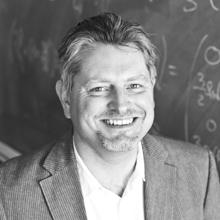
Julien Lesgourgues, cosmologist, explores questions like where did the universe come from, what triggered its evolution, does it contain hints of physical laws or species that we are not yet aware of? A member of the Planck satellite team which published the map of the cosmic microwave background in 2013, he specialises in modelling the evolution of cosmological perturbations, starting from a stage in the early universe called inflation. He authored CLASS, a code used by cosmologists to simulate the universe and watch it evolve on a computer. He is passionate about the arts and also sings operas.