

Speakers
Speakers
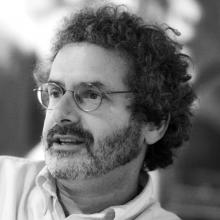
Neil Gershenfeld is the director of MIT's Center for Bits and Atoms, a lab that breaks down boundaries between digital and physical worlds, from creating molecular quantum computers to virtuosic musical instruments. He started Fab Lab, a global network that allows people access to prototype tools for personal fabrication. He also directs Fab Academy, an associated programme for distributed research and education in digital fabrication.

A true digital diva, Imogen Heap’s innovative methods of creating music leap beyond the box. Whether it be producing music or collaborating with fans, she pushes her own boundaries and that of the music industry. She invented the Mi.Mu gloves and developed them with her team to wirelessly sculpt sound through gesture, manipulating voice and instruments live. Her latest project, Mycelia, is making waves with its ‘fair trade for music’ model.

Jeff Frost combines painting, photography, music and sound design into experimental short films created from thousands of photographs. His work is being featured as a major component of U2’s Innocence+Experience tour. Frost visited the facilities at CERN to create vast reverse light paintings for U2’s tour and his own film, Circuit Board Species. From the collected content, he has also made an art piece to be screened exclusively at TEDxCERN.
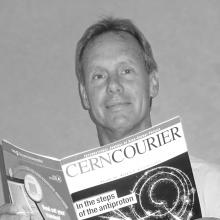
David Lunney is the Director of Research at France’s CNRS and Head of the nuclear physics group at the CSNSM, Université de Paris-Sud. After slinging protons through the McGill University cyclotron for his PhD, he now hangs around CERN’s radioactive beam facility ISOLDE, transmuting lead atoms into gold. Always ready to discuss physics topics – especially over a beer – David believes that nuclear physicists have much to offer society and are not nearly as dangerous as most people think.
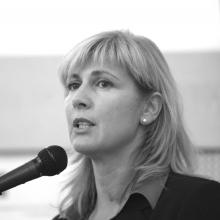
Founder of the Centre for Sensor Technology at University of Maribor, Aleksandra Lobnik also co-founded Institute of Sensors and Environmental Protection, Ltd in Slovenia. Her research is focused on the development of new optical sensors for various applications such as food quality, security and the environment. She takes sensing technology further and asks if sensors could help us better understand ourselves and the world we live in.
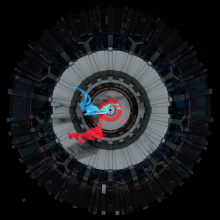
In François Moncarey’s projection mapping work, light inhabits and transforms spaces. Using photos and 3D construction models, François will bring the full-sized image of the CMS detector to life with light in his artistic rendition titled Turbulence. As a part of MySquare, François’ work includes digital arts and dance. With his collective, CENC (Centre for Digital and Physical Expression), he creates visual chemistry between images and choreography.
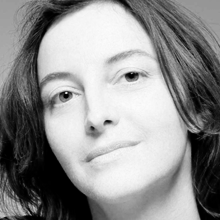
Laura Baudis is a physicist looking for dark matter deep underground. “The nature of the matter which holds galaxies together is one of the greatest unresolved problems in science,” Baudis said. Dark matter may evade all ordinary sensors and detectors, but even it can’t escape the pull of the most notorious force in the universe—gravity. Gravity allows physicists to map the massive fingerprint left by dark matter all over the cosmos. Baudis a professor at the Physik Institut at the university of Zurich and a specialist in weakly interacting particles, such as neutrinos and dark matter. She is developing an extremely sensitive and subterranean liquid Xeon detector which will catch any particles that wiz through it. If dark matter can interact with ordinary matter as many theoriest predict, Baudis’ hopes her new detector will see it.
Follow on Twitter: @lbaudis
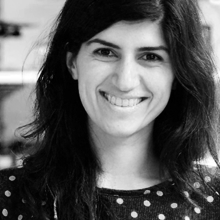
Samira Hayat deeply believes that technology is the solution to many global problems. Her engineering work at the University of Klagenfurt is redefining the role drones play in society. “When I was growing up in Pakistan, all I knew about drones is that they are killing machines,” Hayat said. “I did not know much about what they could do for helping humanity.” Hayat’s is currently creating software and technology that will enables groups of drones to work together as a single unit. She hopes that her work will eventually have applications to larger global issues, such as unmanned search and rescue missions, urgent medical deliveries, and construction in remote areas.
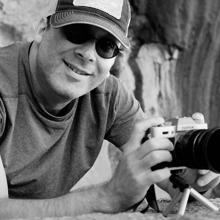
Gary F. Marcus wants to build a human mind from scratch. As Professor of Psychology and Neural Science at New York University, his research combines psychology, linguistics, and molecular biology to map the inner workings of the brain and deconstruct common sense scientifically. By applying a deep understanding of the human mind to artificial intelligence, Marcus hopes to revolutionize the capabilities of modern technology and radically transform society. Marcus is a best-selling author and Co-Founder of Geometric Intelligence, Inc. which is redefining the boundaries of machine learning.
Read more: http://garymarcus.com
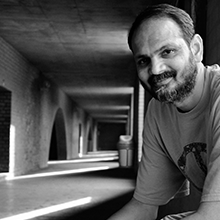
Brij Kothari is the founder of PlanetRead, a not-for-profit organization that pioneered the concept of “Same-Language Subtitling” to promote mass literacy. Kothari and his team partner with TV stations and media distributors to burn subtitles onto movies and music videos, thus making reading more accessible to India’s rural populations. Kothari learned the impact of illiteracy on a community while performing his doctoral research at Cornell University. “The two years I spent in Ecuador as a researcher brought me face-to face with the literacy problem in India.” Kothari said. “We were documenting the knowledge of the indigenous people and hit along huge literacy barrier. We found that the knowledge was being passed down poorly through an oral tradition.” Kothari has demonstrated that the simple solution of subtitling songs and Bollywood films massively improves literacy and promotes reading across India. Kothari is also CEO of BookBox Inc. producing children’s animated stories in more than 25 languages.
Follow on Twitter: @PlanetRead
Read more: http://www.planetread.org/team
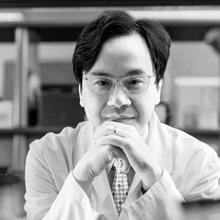
Dennis Lo is the Director of the Li Ka Shing Institute of Health Sciences, the Li Ka Shing Professor of Medicine and Professor of Chemical Pathology of The Chinese University of Hong Kong (CUHK). He is also the Associate Dean (Research) of the Faculty of Medicine of CUHK. Lo’s most ground-breaking research has enabled him to develop a non-invasive technique for prenatal testing. The research took years of struggling until Lo had the unique idea of looking for the baby’s DNA in the mother’s cell-free plasma. “I thought, maybe we’ve been looking in the wrong place for the last 10 to 20 years,” Lo said. The revelation allows families to learn about the health of a developing fetus, avoiding previously risky procedures. After honing this technique, Lo is now investigating its potential applications for early cancer detection.
To find out more about Dennis: http://www.cuhk.edu.hk/med/cpy/Research/AcademicProfiles.htm
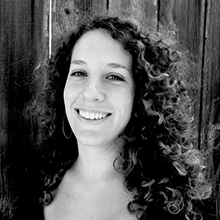
Shannon Dosemagen co-founded a non-profit organization that bridges the gap between environmental research and the impacted communities. As the co-founder and CEO of Public Lab, Dosemagen engages with communities and helps design do-it-yourself research tools for grass-roots science. “Science belongs to the public,” Dosemangen said. “We all can do it and we all have a place in it.” Public Lab was founded during the 2010 BP oil spill in the Gulf of Mexico. During the spill, very few residents had information about the impact on their region. Dosemangen and a group of concerned citizens developed a DIY aerial mapping kit which allowed residents to chart the impact on the places they know and love. Since then Public Lab had expanded around the world and is currently engaging with more than 6000 people through this new type of citizen science.
Read more: https://publiclab.org
Follow on Twitter: @sdosemagen
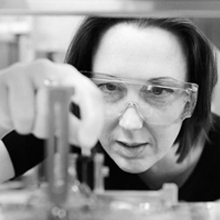
Sheila Rowan started gravity wave research almost thirty years ago during her undergraduate studies at the University of Glasgow. Today, she is now the director of the Institute for Gravitational Research at Glasgow and a contributor to the LIGO observatory, the world’s largest gravitational wave observatory. In January of 2016, the LIGO collaboration announced their first detection of gravity waves. For Rowan, this is not the end, but rather the beginning, of her research field. “Now we can start gravity wave astronomy,” Rowan said. “There are events in the universe that we can only could see with gravity wave signals, and we expect to see many more of these signals in the future.” Rowan thinks that gravity waves could be the key to better understanding dark matter and dark energy—two peculiar phenomena which appear to only interact with visible matter through gravity. She’s also hopeful that it will unveil numerous previous hidden cosmic events in our universe.
Read more: http://www.gla.ac.uk/schools/physics/staff/sheilarowan/
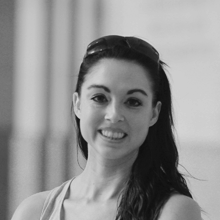
Eleonore Pauwels, Director of Biology Collectives, Senior Program Associate and Scholar at the Woodrow Wilson Center in Washington, is a science policy expert who explores ethical governance and crafts regulations for emerging technologies. Pauwels is particularly interested in the perils and promises of DNA editing, which involves replacing faulty genes to treat and cure diseases. “Gene editing can change a biological blueprint,” Pauwels says. “It’s a defining technology for the future of humanity.”
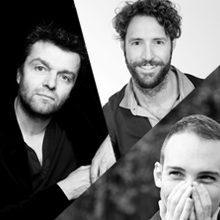
The Agalma Foundation asks the question: what does creativity look like and where does it come from? In order to discover the roots of improvisation, the Agalma Foundation provides an environment where scientists can connect with artists and explore improvisation from both a biological and psychological perspective. “How do you deal with the unknown and unexpected?” asks neuroscientist Nathan Evans, a member of the institute. “The unknown is something we face at every moment. The words I say come from somewhere, but we don’t know where.” In a multimedia performance, Evans will collaborate with pianists Richard Rentsch and Orazio Sciortino, and the visual artists BigMap, composed of two essential figures of Geneva's VJ scene: Matthias Grau (aka Matth) and Jean-Claude Salansky (aka John'C). Together, they will show in real time which areas of the brain are activated when the artists improvise. The discussion will continue with an analysis of how an artist thinks and feels as they are in the process of composing something new.
Read more: https://www.agalma.ch
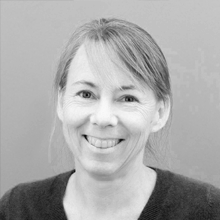
Kate Stafford suspects that the ocean’s babble holds many secrets about the globally changing environment. As an oceanographer at the University of Washington, she is recording the impact of the melting polar icecap by listening to the water that lies underneath. “Depending on the time of year, the seawater under the ice can be an acoustic cacophony of ice and animal noises,” Stafford said. “At other times, the underwater Arctic has some of the lowest ambient noise levels in the ocean.” With these underwater soundscapes, Stafford is able to extract the shifting migration patterns of whales, the invasion of non-native wildlife, and the hum and chug of new human activity in a once pristine and impenetrable territory. Kate has a PhD in Interdisciplinary Oceonography from Oregon State University
Read more: http://www.ocean.washington.edu/home/Kate+Stafford
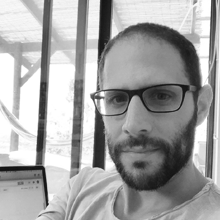
Matan Field is a blockchain researcher and entrepreneur, dedicated to decentralise the world and make it a better place. Starting as a theoretical physicist, Matan has completed his PhD at the Weizmann Institute, researching fundamental physics and String Theory in particular. For two decades, Matan has been curious about alternative economic and organisational models, while increasingly bothered with a feeling that “something is broken”. During his postdoctoral research at the Technion, he has discovered the blockchain and founded La’Zooz, a decentralized real-time ride-sharing network. Field then co-founded Backfeed to develop the basis for decentralised governance and organisations. Matan is dedicated today to bring the first truly decentralised organisation into life.
Read more: http://backfeed.cc
Follow on Twitter: @MatanField